How to Keep a Friendship Alive Across Languages (Messages, Calls, and Shared Memory)
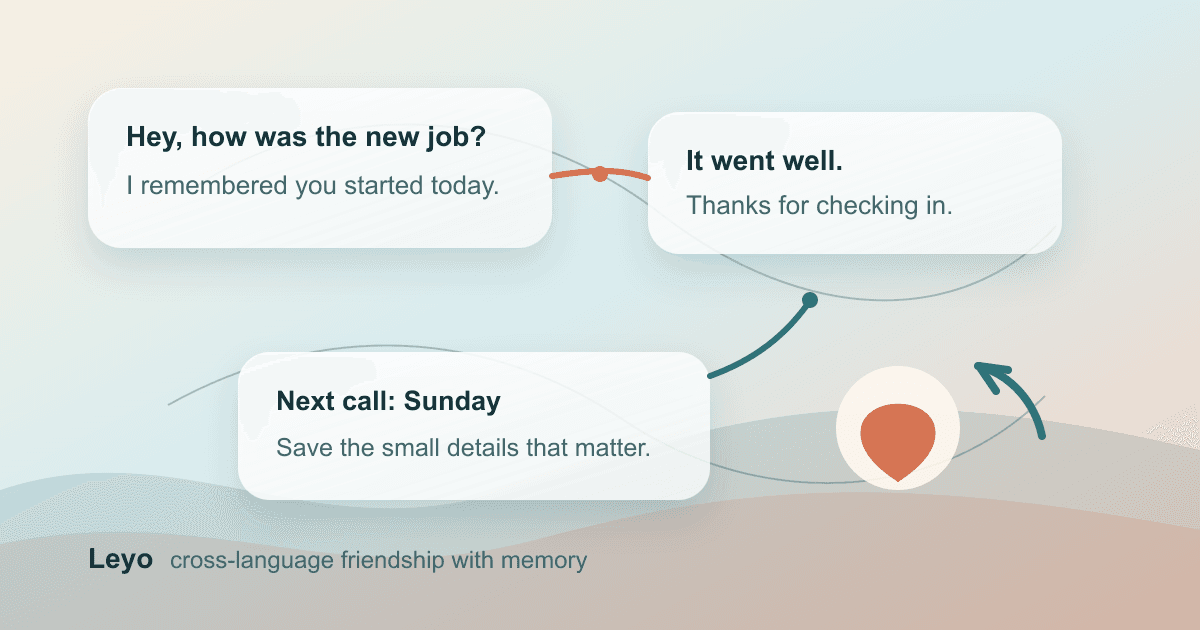
Keeping a friendship alive across languages is less about perfect translation and more about making the relationship easy to continue. You need a simple way to say small things, a comfortable way to talk live, and a shared memory of what matters: names, plans, birthdays, inside jokes, travel dates, and the next thing you promised to send.
The best approach is to build a light rhythm:
- Use short translated messages for everyday contact.
- Schedule occasional calls when a real conversation matters.
- Save the important context so you do not restart from zero every time.
- Follow up on the small personal details that make the friendship feel real.
That sounds obvious, but it is where many cross-language friendships fade. People do not usually drift apart because translation is impossible. They drift apart because every message feels like work.
Start with small messages that are easy to answer
If you and your friend do not share a strong common language, long messages can create pressure. The other person has to translate, understand the tone, decide how to reply, and worry about sounding awkward.
Small messages keep the door open:
- "I saw this and thought of you."
- "How did your exam go?"
- "Are you still planning to visit in August?"
- "This reminded me of our conversation about food in Osaka."
- "No need to reply quickly. I just wanted to say hello."
The goal is not to impress them with language skill. The goal is to make contact feel low-stress.
When you use translation, check tone before sending. A technically correct sentence can sound too formal, too cold, or too intense. If the relationship is warm and casual, your translated message should feel warm and casual too.
Keep a shared thread for the relationship
Cross-language friendships often break down because context is scattered. Some messages are in WhatsApp, some are in Instagram, some are in email, and one important plan was mentioned during a video call. When you cannot easily remember what was said, it becomes harder to follow up.
A shared thread helps you keep the relationship in one place:
- personal updates
- travel plans
- language notes
- photos or links you promised to send
- names of family members or mutual friends
- recurring topics you both care about
- next steps after a call
This is where Leyo is useful. Leyo is being built for AI-powered communication across languages and cultures, not just one-off translation. A cross-language chat should help both people understand each other today and remember what matters tomorrow.
Use calls when emotion or nuance matters
Text is good for small updates. Calls are better when the friendship needs warmth, nuance, or shared presence.
Use a call when:
- you have not talked in a long time
- someone is celebrating something important
- someone is having a hard week
- you need to explain a plan with details
- tone matters more than speed
- you want the relationship to feel alive again
For a cross-language call, it helps to prepare three things before you start:
- a few topics you want to ask about
- any names, dates, or places that may be hard to translate
- one clear next step, such as "let's talk again next month" or "send me the address"
Leyo Meet is designed around this kind of moment: people meeting across languages, with AI helping the conversation stay clear and useful. The important part is not only live understanding. It is also what happens after the call.
Write a short memory after meaningful conversations
After a good conversation, do not rely on memory alone. Write down the few things that will help you be a better friend next time.
A useful note can be very short:
Friend: Mina
Last talked: July 15
What mattered: She is starting a new job next month.
Follow-up: Ask how the first week went.
Language note: Keep messages simple and warm; avoid business-like wording.
Next plan: Send photos from the Seattle trip.
This turns translation into relationship memory. You are not just converting words between languages. You are preserving care, context, and continuity.
Make follow-ups specific
Generic follow-ups are easy to ignore:
- "How are you?"
- "Hope everything is good."
- "Long time no talk."
Specific follow-ups show that you remember:
- "How was your first week at the new job?"
- "Did your sister's wedding go well?"
- "Are you still thinking about visiting in October?"
- "I found the cafe you told me about."
- "You mentioned your father was recovering. How is he now?"
This matters even more across languages. When communication takes effort, remembered details make the effort feel worthwhile.
Share culture without turning every message into a lesson
In a cross-cultural friendship, it is natural to explain holidays, family customs, food, work habits, humor, or etiquette. But the relationship should not feel like a classroom all the time.
Try simple cultural sharing:
- send a photo and one sentence of context
- explain why a holiday matters to you
- ask what a phrase means in their culture
- share a song, place, recipe, or local habit
- ask before making assumptions about meaning
The best cross-cultural communication is curious without being heavy. You are helping each other feel included.
Create a realistic rhythm
You do not need to message every day to keep the friendship alive. In fact, daily pressure can make the relationship harder to maintain.
Pick a rhythm that fits the relationship:
- small message every week or two
- longer catch-up once a month
- Leyo Meet call before or after travel
- birthday and holiday reminders
- shared notes for plans you both care about
The rhythm should reduce guilt, not create another obligation.
A simple workflow you can reuse
Use this structure when you want to reconnect:
- Send one warm, specific message.
- Mention one remembered detail.
- Ask one easy question.
- Offer a call only if it feels natural.
- Save the important context afterward.
Example:
Hi Mina, I remembered you were starting your new job this month. How did the first week go? No rush to reply. I just wanted to check in.
If the conversation continues, you can move into a call:
It would be nice to catch up properly. Do you want to do a short call this weekend? We can keep it simple and use translation when we need it.
Where Leyo fits
Leyo is for people who want relationships across languages to feel natural, not transactional. Translation is part of that, but the larger goal is communication with memory: chats that preserve context, Leyo Meet conversations that help people understand each other live, and follow-ups that keep the relationship moving.
For international friendships, global communities, travel connections, multicultural families, and business relationships that become personal over time, the real question is not "Can this sentence be translated?"
The better question is: "Can we keep understanding each other over time?"
That is the communication problem Leyo is built around.